Birth Announcement Card Template 14: A Designer's Review
As someone who spends more time staring at stitch simulations than most people spend on their phones, I approach every new machine embroidery design with a healthy dose of skepticism. We have all been there: you download a file that looks crisp on the screen, only to watch it turn into a bird's nest of thread on your actual fabric. That is why I took a close look at Birth Announcement Card Template 14 before committing it to any client work or personal projects. While this item is categorized under Print Templates, its visual structure offers fascinating potential for translation into thread, provided you understand the nuances of moving from ink to stitch.
The First Impression: Mood and Layout
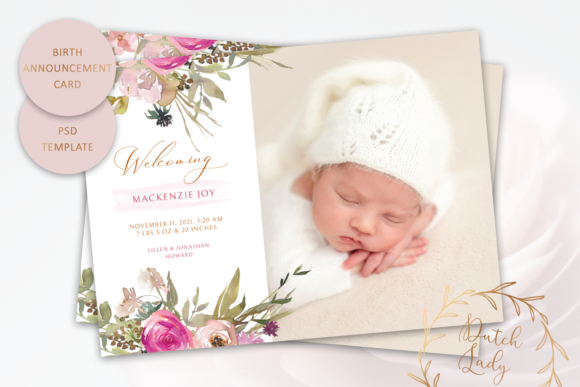
When I first opened the preview for Birth Announcement Card Template 14, what struck me was its balanced composition. In the world of design assets, balance is everything. The layout feels modern yet timeless, avoiding the overly cluttered aesthetics that often plague baby-themed graphics. There is a gentle mood here, likely utilizing soft curves and clear typography spaces that suggest celebration without screaming for attention.
For an embroidery designer, this initial visual personality translates well into specific stitch types. The clean lines suggest areas perfect for a smooth satin stitch, while any larger graphical elements could be adapted into a textured fill stitch. The level of detail appears moderate, which is crucial. If a design is too intricate, it gets lost on textured fabrics; if it is too simple, it lacks the perceived value needed for a handmade product. This template sits in a sweet spot where the eye is drawn to the central message, making it an ideal candidate for a focal point on a garment or home decor item.
Real-World Application: From Screen to Stitch
Let's move beyond theory and talk about how Birth Announcement Card Template 14 performs in a real-life scenario. Imagine a client comes to your craft business asking for a custom gift for a new parent. They want something better than a generic store-bought card. They want a keepsake. This is where repurposing a print template concept into an embroidery project shines.
I can easily visualize this design digitized onto a high-quality linen tote bag design. The natural texture of the linen would contrast beautifully with the sheen of rayon or polyester threads. Alternatively, consider a sweatshirt embroidery project. A neutral-colored hoodie featuring this announcement style creates a cozy, personalized piece of custom apparel that a new sibling or proud grandparent would cherish. It also works exceptionally well as an embroidered patch that can be ironed or sewn onto a diaper bag or a nursery pillow cover.
For Etsy sellers and boutique owners, the versatility here is key. You aren't just selling a stitched image; you are selling a memory. Whether it is used for holiday embroidery gifts during the festive season or as a year-round personalized gift, the design's adaptability allows it to fit various small shop product lines. It elevates a simple finished product into something that feels bespoke and thoughtful.
Navigating Fabric and Technical Challenges
However, enthusiasm must be tempered with technical reality. Just because Birth Announcement Card Template 14 looks good as a vector or raster image does not mean it will automatically succeed on every surface. There are specific scenarios where you need to proceed with caution.
- Fabric Texture: On highly textured fabrics like terry cloth or heavy wool, fine details from the original template might get swallowed up. You may need to simplify certain elements during the digitizing phase.
- Stretchy Materials: If applying this to a stretchy onesie for baby embroidery, the stitch density becomes critical. Too many stitches can cause the fabric to pucker or restrict movement. A lighter touch or a different stabilizer strategy is essential here.
- Dark Fabrics: The original template likely assumes a white or light background. If you are stitching this onto a navy or black garment, you must plan for underlay stitches and potentially adjust the thread colors to ensure sufficient contrast. What reads clearly in black ink might vanish in dark blue thread on a dark background.
- Small Hoop Sizes: If the design includes intricate lettering or tiny decorative accents, ensure your hoop size can accommodate the necessary resolution. Cramping a detailed design into a small hoop often leads to registration issues.
Enhancing Brand Value and Customer Trust
In the competitive landscape of commercial embroidery, the difference between a hobbyist and a professional often lies in the finishing details. Using a well-considered design like Birth Announcement Card Template 14 contributes significantly to brand consistency. When customers see a cohesive, well-executed design, it builds trust. It tells them that you care about the aesthetics of the finished product, not just the speed of production.
This attention to detail enhances the giftability of your items. A recipient is far more likely to display an embroidered wall hanging or wear a customized apron if the design feels intentional and polished. For digital product sellers who might offer this as a mockup or a base for further customization, providing clear guidance on how the design translates to physical goods adds immense value to your listing. It shows you understand the entire lifecycle of the product, from the digital embroidery file to the final stitch.
Practical Notes for the Working Designer
Before you load this design into your machine or list it in your shop, here are a few practical steps I recommend based on my experience:
- Test on Scrap First: Never run a new design on your final product immediately. Use scrap fabric of the same weight and texture to test tension and density.
- Check Contrast: Review your thread colors against your chosen fabric. Sometimes a color that looks vibrant on screen appears muddy when stitched. Test in both light and dark environments.
- Stabilizer Selection: The right stabilizer can make or break the project. For stretchy knits, use a cut-away; for woven stable fabrics, a tear-away might suffice. Don't guess.
- Licensing Verification: Since Birth Announcement Card Template 14 is originally a Print Template, you must confirm the licensing terms before using it for commercial embroidery. Ensure you have the rights to modify, digitize, and sell the resulting physical or digital goods.
- Mockup Testing: Create black and white mockups to check the readability of the design without the distraction of color. This helps identify if any lines are too thin or if spacing is inadequate.
Ultimately, Birth Announcement Card Template 14 represents a solid foundation for creative adaptation. It is not just a graphic; it is a starting point for storytelling through thread. By respecting the limitations of the medium and leveraging the strengths of the design, you can create embroidery files and finished goods that stand out in a crowded market. Whether you are an Etsy seller looking to expand your catalog or a hobbyist making a special gift, this template offers the clarity and charm needed to make a lasting impression.