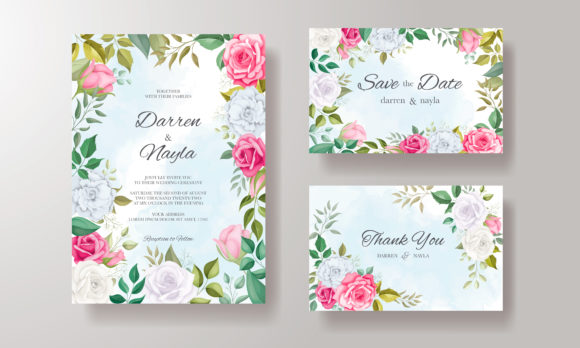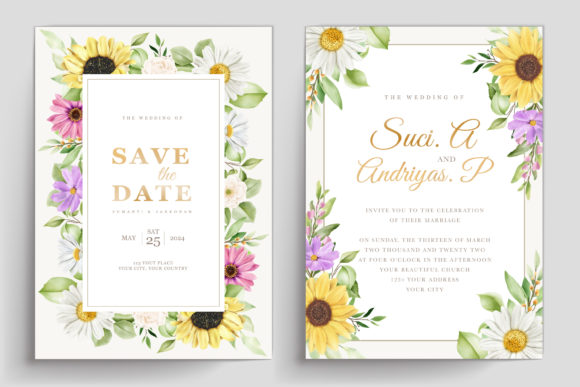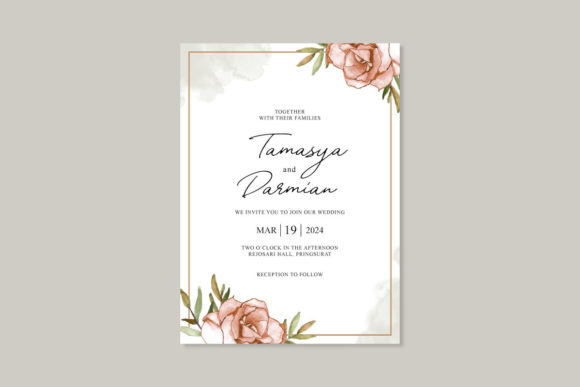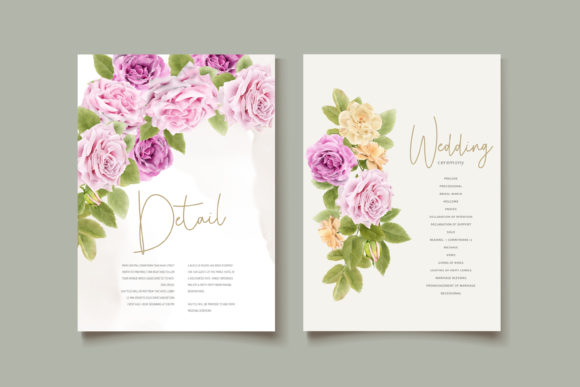
Wedding Card Template Foliage Watercolor for Print Templates
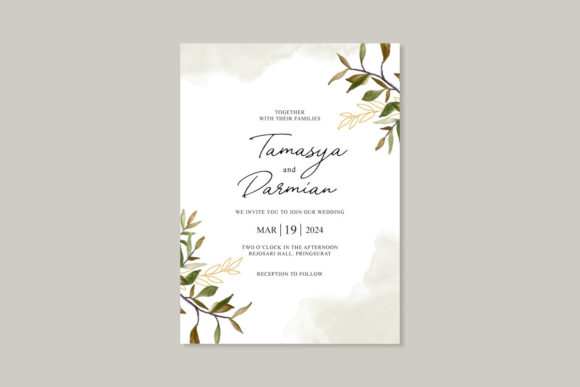
When I first opened the files for the Wedding Card Template Foliage Watercolor, my immediate reaction was one of relief. As a designer who frequently juggles tight deadlines for boutique clients, finding a graphic design asset that balances organic charm with structural integrity is rare. The initial visual impression is soft yet deliberate; the watercolor textures possess a genuine hand-painted quality rather than the flat, digital look that often plagues stock illustrations. For a recent project involving a handmade botanical skincare line launching a limited-edition gift set, this asset provided the perfect foundational mood. It speaks to authenticity, a crucial element in small business branding where customers crave a human touch.
Establishing Mood and Brand Identity
The core strength of this template lies in its ability to establish an emotional connection instantly. The foliage elements are not merely decorative; they frame the content with a sense of growth and natural elegance. In the context of brand identity, using such an asset signals to the audience that the brand values craftsmanship and nature. For the skincare client, we needed visuals that felt earthy but sophisticated. The watercolor style bridges the gap between rustic and refined, making it ideal for marketing visuals that need to stand out in a crowded creative marketplace.
Unlike generic clip art, the layers in this digital product allow for significant manipulation. We were able to adjust the opacity of the greenery to ensure it didn't overpower the typography. This level of control is essential when working on logo design concepts or complex packaging design where every pixel counts. The color palette, dominated by muted greens and soft earth tones, offers a versatile base that can be tweaked to match specific brand colors without losing its watercolor integrity.
Versatility Across Real-World Design Applications
In practical application, the Wedding Card Template Foliage Watercolor extends far beyond its namesake. While it is categorized under Print Templates, its utility spans various mediums. For social media graphics, particularly Instagram stories and Pinterest pins, the organic edges of the leaves create a beautiful border that draws the eye inward. We utilized the assets to create a series of editorial design layouts for the client's blog, where the foliage acted as section dividers, adding a touch of whimsy to long-form content.
For physical products, the potential is equally vast. If you are running an Etsy product shop or a print-on-demand store, this asset translates beautifully onto tote bags and mugs. The resolution holds up well when scaled for larger formats like posters or event flyers. We also tested it as a sticker design; the transparent backgrounds (assuming high-quality PNGs are included) allowed us to place the foliage directly onto colored cardstock without unsightly white halos. For Cricut project enthusiasts, if vector files are available, this becomes a powerful tool for creating custom invitations or scrapbook embellishments.
Ideal Use Cases for Maximum Impact
To get the most out of this design bundle, it is best deployed in areas where the artwork can breathe. It excels in:
- Hero Graphics: Using the foliage as a background element for website headers or landing pages creates an inviting atmosphere.
- Product Mockups: Overlaying the watercolor elements onto product photos adds a layer of depth and context, making the item feel part of a lifestyle.
- Themed Collections: Perfect for seasonal campaigns, especially spring and summer launches where nature themes resonate.
- Packaging Details: Small clusters of leaves work wonderfully as accents on box lids or label corners.
- Printable Designs: Ideal for wall art, planners, and greeting cards where the texture of the watercolor adds perceived value.
Strategic Limitations and Design Caution
However, professional judgment requires knowing when not to use an asset. The intricate details of the watercolor foliage can get lost in crowded layouts. If your design already contains heavy text blocks or complex patterns, adding this element might create visual noise rather than harmony. It is generally unsuitable for minimalist branding projects that rely on stark, clean lines and monochromatic schemes, as the soft edges of the watercolor may clash with a rigid geometric aesthetic.
Furthermore, caution is advised when using these assets at very small sizes, such as favicons or tiny social media profile icons. The delicate gradients and fine leaf veins may blur, reducing legibility and impact. Similarly, placing dark watercolor elements over complex backgrounds or low-contrast images can ruin the visual hierarchy. Always ensure there is sufficient negative space around the foliage to let it function as a focal point or a supportive frame, rather than a distraction.
Technical Considerations for Commercial Projects
Before finalizing any client deliverable, rigorous testing is non-negotiable. When reviewing the Wedding Card Template Foliage Watercolor, I always perform a series of checks. First, test it in black and white. This reveals whether the contrast levels are strong enough to maintain shape without relying on color. Next, check contrast on light and dark backgrounds to ensure versatility. A good commercial design asset should adapt to different contexts without requiring excessive editing.
It is also vital to preview it at small and large sizes to verify scalability. If the file format is raster-based (PNG/JPG), ensure the DPI is 300 or higher for print purposes. If it includes an SVG design or vector format, inspect the editability of the paths—can you recolor individual leaves? Does the transparency hold up in Adobe Illustrator or Canva? Speaking of Canva template integration, many designers upload these assets to create customizable templates for their clients, so checking licensing terms regarding "template creation" is critical.
Finally, consider typography pairing. The soft, organic nature of watercolor foliage pairs exceptionally well with script fonts and handwritten fonts, reinforcing the handmade vibe. However, for a more modern twist, try contrasting it with a clean sans serif font or a structured serif font to ground the design. Avoid overly decorative display fonts that might compete with the detailed illustration.
Final Verdict on Professional Utility
Ultimately, the Wedding Card Template Foliage Watercolor is a robust creative design resource that elevates the perceived quality of a project. It fosters visual trust by suggesting attention to detail and artistic intent. For content creators, bloggers, and marketers, it offers a quick way to achieve a polished, cohesive look without commissioning custom illustrations. As long as you respect its limitations regarding scale and complexity, and strictly adhere to the commercial license agreements, this asset is a valuable addition to any professional designer's toolkit. It transforms standard web design and printable design tasks into opportunities for storytelling, helping brands connect with their audience on a deeper, more emotional level.